


The Remix is the KPI is a new collab by me and Domingo Beta. Visual objects are by the one and only Domingo Beta. We made this for FLORA’s Field Guide Vol.1 — it’s out now in print and digital on Metalabel.
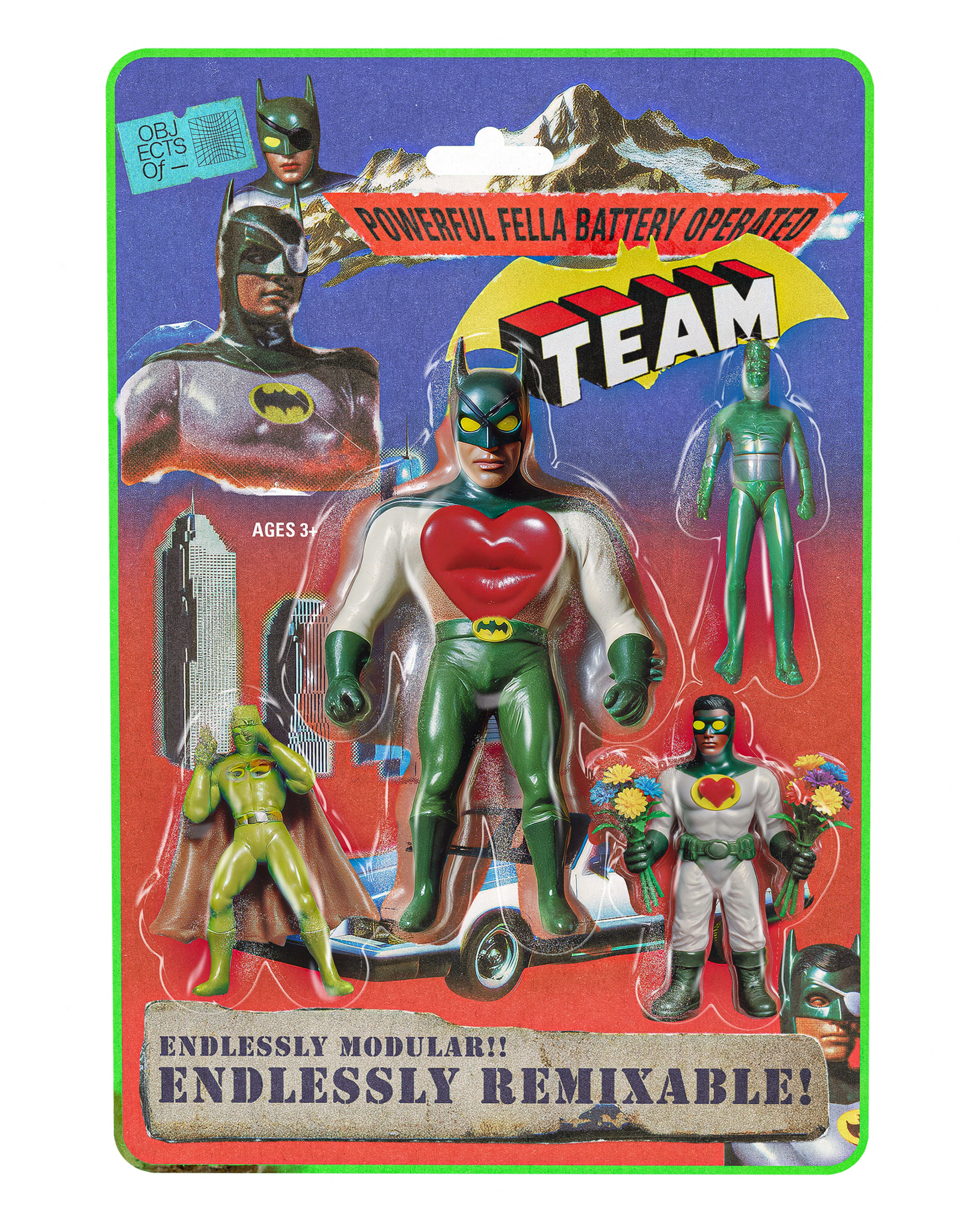
I’ve been thinking about Batman again. Not about Robert Pattinson as a brooding Bruce Wayne. Nor if the release of Matt Reeves’ next installment in the Hollywood franchise will be further delayed beyond 2027. It’s because Batman is approaching his hundredth birthday.
Over the course of almost a century, across multiple generations, we’ve seen over a dozen different live-action films. Dozens of different TV adaptations. Over fifty different video games. Nearly 8,500 different comic book storylines. Roughly 150,000 different fanfics on Archive of Our Own. Millions of fan-made content across virtually every social platform. All from a single seed of a man dressed as a bat.
What strikes me about Batman is the generative chain reaction he’s inspired across print, film, television, video games, social media and beyond. With each new medium, new Bruce Waynes are born. With each new digital tool, the barrier to spawning new Dark Knights lowers even further. The less design and technical skills required, the more Batmans we seem to get.
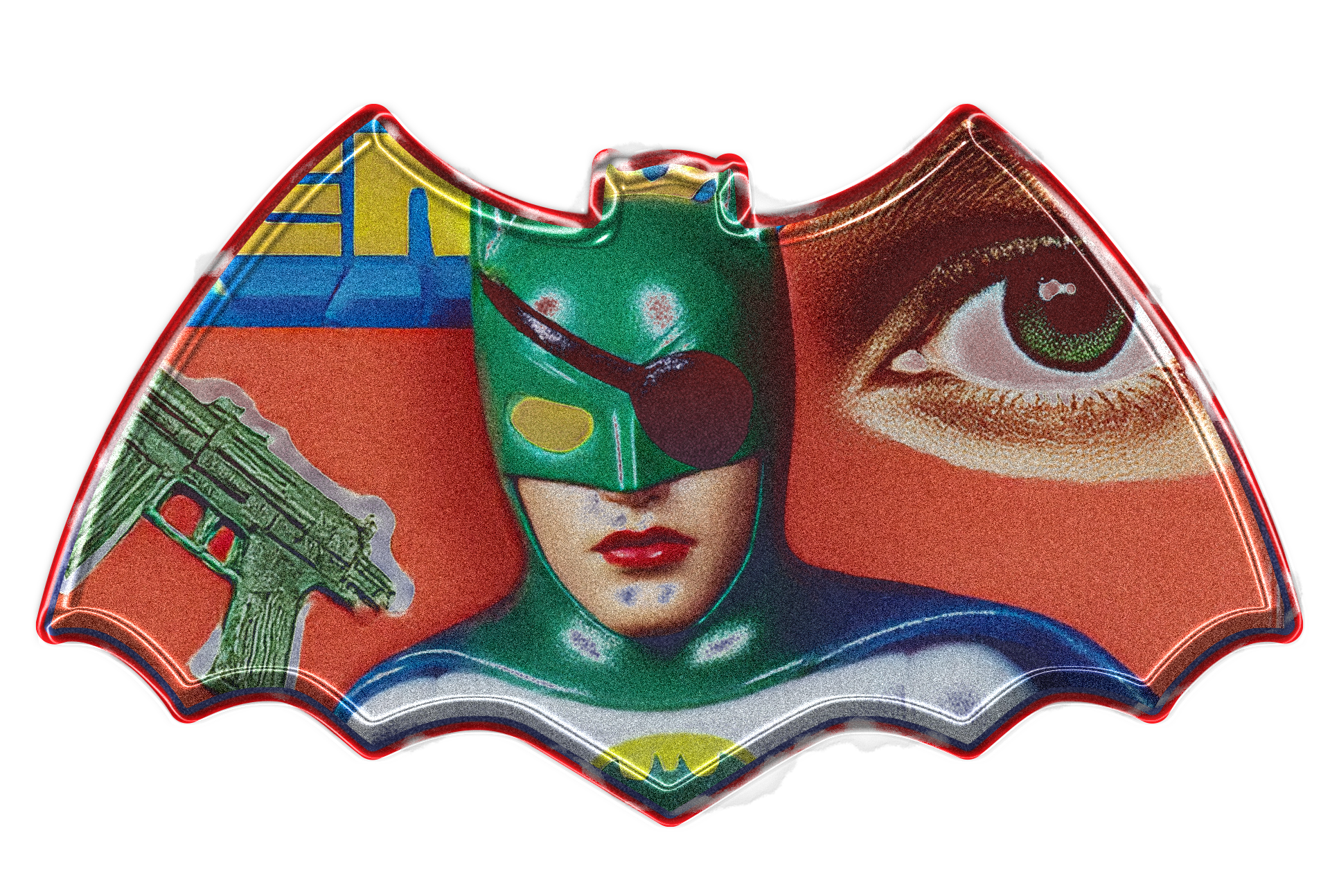
Now, the era of generative AI is before us. Unlike earlier mediums, each with their own bottlenecks of production constraints, generative AI explodes creation outward. To put it in the media theory terms of Marshall McLuhan, what makes this new medium most distinct is that it obsolesces linear creative processes that lead to a singular, finished product. Instead, it enhances a co-creative process with infinite, rhizomatic variations.
The generative era asks of us, in a world where anything can be created instantly and infinitely, what does the unique marker of creative success look like?
Many brands and creators still chase the typical KPIs, or key performance indicators. Reach. Views. Engagement. “Make it go viral,” they say. Those are old KPIs for old gods.
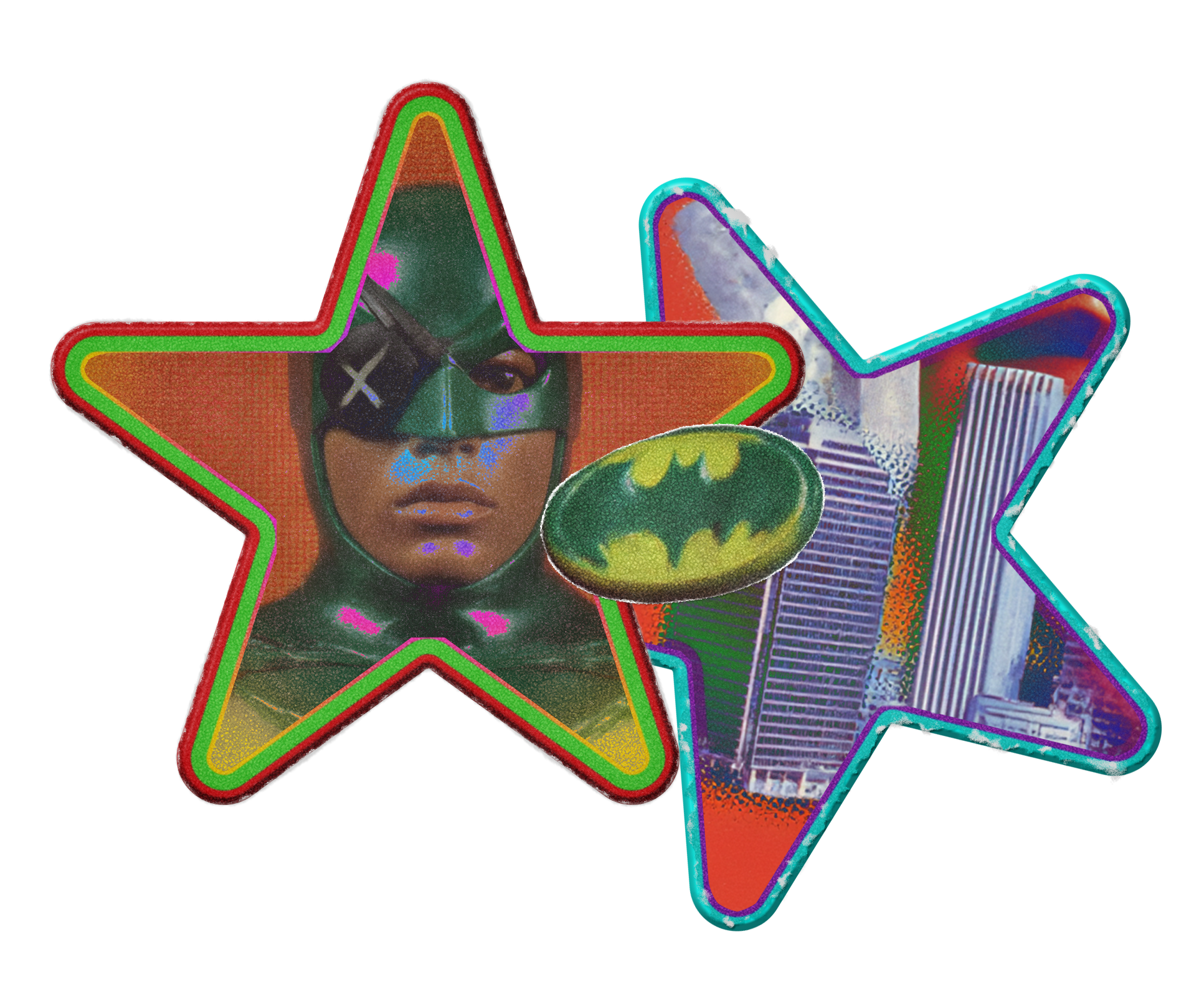
In the generative era, the Remix is the KPI. The work is not the singular piece that touches a million people, but the one that begets a million derivative works.
Christopher Nolan’s The Dark Knight trilogy is a masterpiece, sure. It’s the one we continuously rewatch. The one that re-enters theaters and sells out even a decade later. But the idea of Batman, that is the real engine. Batman is a seed, not a single film. Batman is endlessly modular. Endlessly remixable.
“AI is doing a remarkable thing by allowing for maximal participation in previously static forms like film. It’s not much different from DJing, a major acceleration and facilitator that drastically lowers the barriers to entry. In McLuhan terms, it’s drastically ‘cooling’ off the media – throwing a bucket of ice water at it. This is also part of the shift that McLuhan forecasted, where the consumer increasingly becomes the producer.”
The generative era asks of us, what makes an idea most worthy of a remix? What are the atoms of a story that invite maximum cultural mutation?
This isn’t new behavior. In his 1967 essay “The Death of the Author,” Roland Barthes has long since argued that “a text’s unity lies not in its origin, but in its destination.” Where does Batman want to continue to take us? It’s no longer just about the audience’s open interpretation, but open creation, beyond the author’s original intent.
We’ve been remixing stories forever. Folklore. Bootlegging. DJing. Fanfiction. Memes. Video game mods. Reaction videos. TikTok fan edits. It is the secondary market of media and storytelling. But until recently, each act of remaking required mechanical effort. Drawing, writing, designing, editing, coding. Now, the only barrier between idea and artifact is simply typing.
We’re already witnessing early AI-era mythopoesis – expanded world-building through repetition and remix. Through the Ghiblification phenomenon, ChatGPT transformed real-life scenes into Studio Ghibli’s animated whimsy, from personal photographs of people’s wives and dogs, to federal ICE agents. Italian Brainrot characters continue to proliferate across TikTok, with AI-generated crocodile airplanes and sneaker-wearing sharks invading the feed. The Sora app prominently places the Remix button in its user interface, front and center, and from it, chains of South Park and Family Guy clips mutate like DNA strands across the platform.
Even without AI, the past has seemingly already brought us every Batman imaginable. A fan-made film with Bruce’s father, Thomas Wayne, as a broadsword-wielding Batman, fighting Killmonger from Marvel’s Black Panther. An anime with Batman as a time-traveling ninja, fighting samurais in feudal Japan. Many fanfics of Batman and Robin exploring a romantic sexual relationship. Bootleg Batman action figures stuffed into Power Rangers packaging. Batman as a playable video game character, modded into Grand Theft Auto, Mario Kart and The Legend of Zelda: Breath of the Wild. Batman appearing at a real-life George Floyd protest in Philadelphia. Even Batman hentai on Pornhub.
So if you’re wondering, in this generative era, do we really need more Batmans? The answer is certainly, yes. We will get more Batmans. The best Batmans we’ve yet to see. The worst Batmans we’ve yet to see. Not because we need more Batmans. But because remixability is the creative gravity of this medium. And ideas like Batman are its black holes.
The Remix is the KPI.

Nick Susi is a writer and strategy executive, exploring the technological, societal and psychological forces that shape our identity, perception and culture. He has led strategy for dotdotdash, Complex, The FADER and Jay Z’s former media brand Life+Times. His research and writing can be found in Business of Fashion, GQ, FWB FEST, Joshua Citarella’s Do Not Research, Matt Klein’s ZINE, Boys Club, Future Commerce, Water & Music, and the Library of Congress.
Great title
instant click